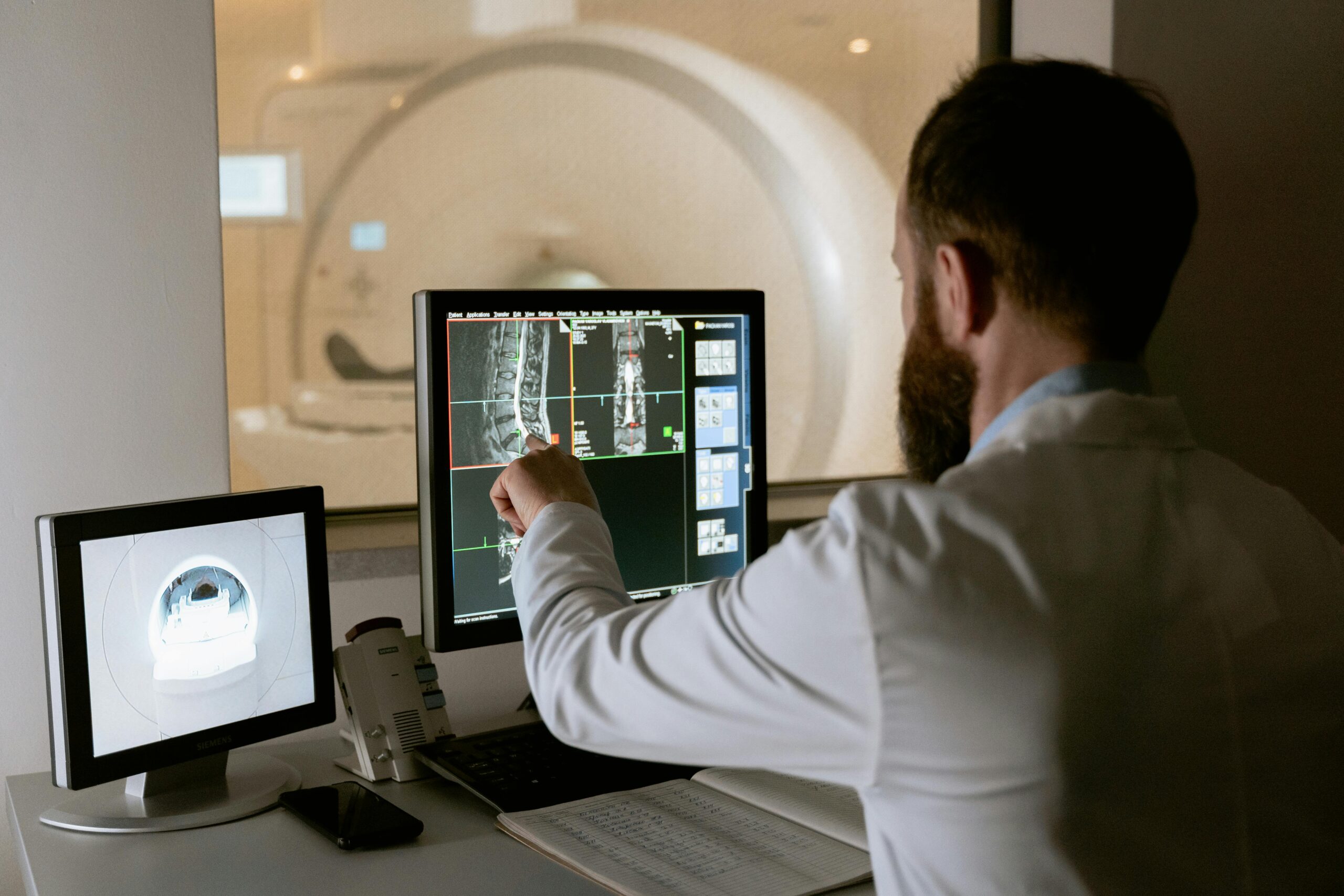

In early 2026, Artificial Intelligence has transitioned from a supportive “second pair of eyes” to an agentic partner in clinical workflows. The most significant shift this year is the move toward Multimodal Fusion, where AI diagnostic systems no longer look at just one type of data (like an X-ray) but simultaneously analyze pathology slides, genomic sequences, and real-time wearable data to reach a conclusion.
🔬 1. Radiology & Imaging Breakthroughs
Radiology remains the “proving ground” for medical AI, with 2026 seeing massive leaps in diagnostic speed and accuracy.
- 96% Accuracy in Ultrasound: AI assistance has pushed radiologist accuracy from 92% to 96%, significantly reducing the need for invasive follow-up biopsies.
- BrainIAC (Brain Imaging Adaptive Core): A new foundation model launched in 2026 that can predict “brain age,” dementia risk, and even specific tumor mutations from a single routine MRI. It is notable for its Self-Supervised Learning, meaning it can learn from unlabeled data, which is crucial when specific annotated medical data is scarce.
- The “Under-Seconds” Diagnosis: Systems like Huawei’s RuiPath and Alibaba’s DAMO PANDA are now detecting early-stage pancreatic and gastric cancers in seconds, outperforming human specialists in sensitivity (up to 99.43% faster diagnosis time).
🧬 2. Agentic AI & Pathology
In 2026, we’ve moved past simple algorithms to Vertical AI Agents—autonomous digital specialists that manage specific diagnostic tasks.
- Biopsy Specialist Agents: These agents don’t just “see” cancer; they autonomously calculate Gleason scores (for prostate cancer) and assess staging with near-expert medical reasoning.
- OpenFold3 & Structural Biology: AI models can now predict protein-ligand interactions with the precision of X-ray crystallography, allowing pathologists to understand the molecular driver of a disease as they diagnose it.
- Pathogen Detection: AI-driven pathogen detection from imaging has reached 96.3% accuracy, allowing for near-instant identification of infections that previously required days of lab culture.
🕒 3. The “Pre-Symptomatic” Revolution
The biggest trend of 2026 is Predictive Diagnostics—identifying illnesses years before a patient feels sick.
- Digital Twins: Doctors now create virtual biological models of patients to simulate how a disease might progress or how they will respond to a specific drug.
- Wearable “Early Warning” Systems: Contactless smartphone scans (using Remote Photoplethysmography) can now detect subtle changes in blood flow under the skin to predict hypertension or cardiovascular resilience during a simple 30-second “selfie.”
- Rare Disease Flagging: AI systems are now flagging roughly 8% of patients for potential rare diseases by spotting subtle patterns in EHR (Electronic Health Record) history, with a 75% confirmation rate by specialists.
⚖️ 4. The “Trust & Transparency” Crisis
As of February 2026, the primary barrier to AI adoption is no longer technology, but Ethics and Data Integrity.